Thursday, February 19, 2026

Trust the Plot (Or Don’t): Plot Rerouting

 Let's talk about the NEW plot, and find some inspirations for the vibe we wanna give off in the opening. 


Main Plot

Our film opening follows a couple, Sarah and Adam, who seem to be the blueprint of a perfect relationship. The mise-en-scene will reflect this idea, with bright coloring on the scenes and bright costumes and set decorations. They will be driving together and suddenly get crashed into by another car, killing Sarah who was in the passenger seat as Adam drove. This sends Adam into a guilt spiral as he feels partially responsible for Sarah's fate, and makes it his mission to find the driver who crashed into them that night. What started off as a sweet, relaxed love story ends in a revenger plot that a year later is still a mystery. The mise-en-scene will change entirely to show the shift in tone. Muted, gray colors will be the coloring on screen and in elements like costuming and set decorations as well. The rest of the hypothetical film would be Adam's plan being carried out after finding Sarah's killer, while he still goes into psychological war by himself as Sarah pops into his life as a hallucination and reflection of his guilt and trauma from that night. 

Pre-accident inspiration

(Warm tones show calmness and familiarity)


[Image on Pinterest]. (n.d.). Pinterest. https://pin.it/4c68hNhqp
[Image on Pinterest]. (n.d.). Pinterest. https://www.pinterest.com/pin/4292562141071462/


Post-accident inspiration


(Muted colors convey a depressed state)


           [Image posted on Pinterest]. (n.d.). Pinterest. https://pin.it/7tJ0ZzFUx

[Image posted on Pinterest]. (n.d.). Pinterest. https://www.pinterest.com/pin/334955291057626062/


 I'll post more in-depth costume descriptions to fit and develop the characters, but for now, I have to figure out filming days because that has to get done soon!!!! 

KBlog, byeeeee!!!!

Sunday, February 8, 2026

media theories!!!!!!!

 Everybody's favorite time is here...media theoriessss

I'll be honest, at first, I did NOT like researching media theories only because I didn't understand how they were different and couldn't see the uniqueness of each. Now, I can actually appreciate how they help in processing and analyzing media. So, with that being said, let's look at some theories I can incorporate for my final!

1. Enigma Codes

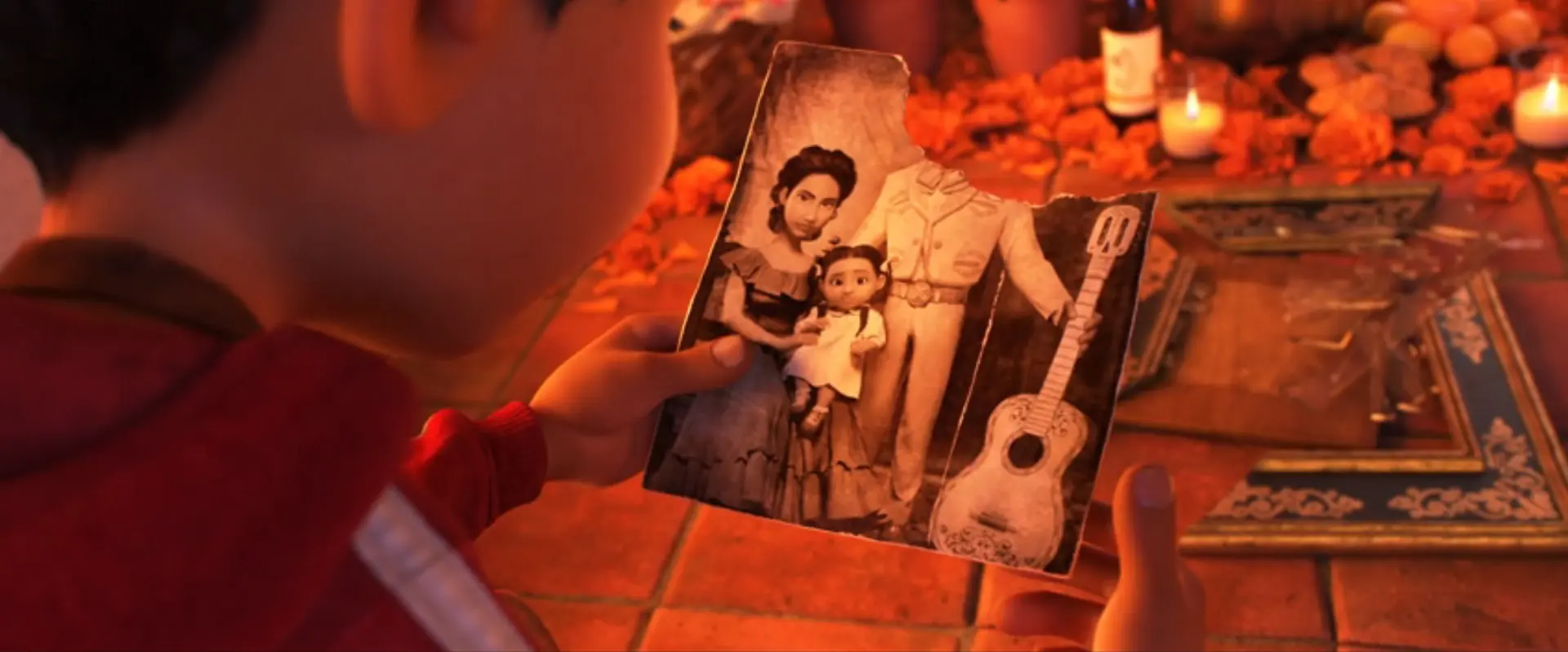
Enigma code are central to genres like psychological horror because confusion and suspense are key genre characteristics. These types of films often withhold information from the audience, leading to unanswered questions about what is real or not and who can be trusted. They even lead to questions open whether certain events even happened. These codes force audiences to feel involved and immersed, as they try to connect these fragmented pieces and figure out the clues themselves. The partial revealing of information builds more tension and reflects the protagonist's confusion as well. By not feeling completely informed, the audience remains in a state of unease, which is the purpose of psychological horror. 

example of an enigma code: Unkrich, L., & Molina, A. (Directors). (2017). Coco [Film still]. Pixar Animation Studios.

Action and Enigma Codes in Narratives

2. Hall’s Reception Theory

Similarly to enigma codes, Hall's Reception Theory encourages fan immersion, which could stem into different interpretations of a plot as well. Different viewers may find different meanings behind elements of a film, for example, a protagonist to some can be seen as an antagonist to others. Open endings and unreliable narration like that can lead to debates among audiences. This reflects another goal of psychological horror which is to leave an audience unsettled and questioning what they've seen. 

Hall's Reception Theory explained: Hall, S. (n.d.). Encoding/decoding model of communication [Diagram]. Media Studies. https://media-studies.com/wp-content/uploads/2021/07/hall-diagram-602x320.jpg

encoding / decoding diagram


These 2 theories would be super interesting to develop and would definitely show Cambridge that our group has a great understanding to genre characteristics and conventions, which could mean our opening scoring high??? Only time will tell, though.

I'll talk to you guys next time when we start figuring out actual character development and mise-en-scene!!

KBlog, byeeeee!!!!!


Resources: 

Media Studies. (n.d.). Action & enigma codes. https://media-studies.com/action-enigma-codes/

Media Studies. (n.d.). Stuart Hall: Encoding and decoding. https://media-studies.com/action-enigma-codes/

Starting From Scratch

 Okay...so about the serial killer thing...we decided to scrap it. Which kinda sucks considering the research that went into all that specifically, but it made more sense to do something a little more simple. 

Our group decided that it'd be easier to achieve this plot in 2 minutes if it was based off an accident. So, instead of a serial killer, it's gonna be focused on 2 friends got in a car crash because of the driver being distracted. The crash kills the friend in the car, which makes the driver feel guilty for her death. He then wakes up in the body of that "victim" and it leads to his psychological demise fueled by guilt. 

This idea seemed a little less complicated which makes the narrative way more clear. Here's the storyboard for this idea:


While it's different from the original idea, this is more psychological and dives more into the mental  tension built from past actions. I'm glad we finally figured out how to do this and i'm so excited to start the actual production!

KBlog, Byeeee!!!


Saturday, February 7, 2026

Plot Time!!

 Now that I've researched and established my genre, it's time to figure out the plot!! Like I've probably said before, I've been thinking about this idea for a second now. And after talking with my group members, I feel pretty set on what we want to do. 

We landed on a psychological horror film opening with some fantasy genre aspects. Since it's psychological horror, the scariness needs to come from mental or personal aspects, rather than it simply being character vs. monster. We want to explore themes of karma and morality, and how that can lead someone into a spiral. This can be explored through unorthodox forms of punishment, which is the main element of our plot. While there's been many different movies where people switch bodies (think Freaky Friday (2003)), what gives ours more tension and eeriness is the fact that our protagonist, a serial killer, will have to wake up in the body of one of his past victims and relive the days of their murder, BUT from the victim's perspective. This means the serial killer will not only live as his victims for a day, but he will also have to face himself as he feels his own wrath/actions. This becomes a challenge to his empathy, morals, and his overall state of mind.

How will we convey all this in 2 minutes? That's actually a great question. As of right now, we are still figuring out the best approach when it comes to tackling all this exposition in such a short timeframe, but our group feels the best way to do it is to establish overall background info and context, and end the "excerpt" with a suggestive tone, almost like leaving the audience in suspense, wondering what will happen next. We can do this by showing him waking up in the different body, but not explaining it. A fun idea which might work is that we show the victim, doing daily morning activities but with small flashbacks to foreshadow the murder; although we don't want to reveal that its the killer in the body until the end of the 2 minute clip. Like tricking the audience into thinking it's a normal morning routine but then there's a fun mirror transition to show that the visions being shown from before are actually from the POV of the serial killer, not the victim, and he's actually in the victim's body that whole time. That misdirection and playing with the audience also fits the psychological horror genre due to the confusion it evokes. 

I actually found some really cool inspiration from the film Last Night In Soho ( 2021) for how we can play with the characters and the mirror: 

Last Night in Soho | How the mirror effect was achieved [Video]. (2024, May 17). YouTube. https://youtu.be/4ipPJ5Ug7eU


We want to figure out the best way to make our opening complicated enough to where it's interesting and a intriguing storyline, but still simple enough to where the viewers can understand what's happening by just watching those 2 minutes. It's an ambitious task, definitely, but I have a lot of faith in our group and I know we will make it work!

Alright that's all I have for now, 

KBlog, byeeee!!

Sunday, February 1, 2026

More Than Names: Credit Sequences

Hey blog! I'm backkkk... today I want to analyze how credit sequences can be transformed from simply listing random names into a way strengthening a film's narrative; and how I can achieve this myself...so let's start!


1. 

The credit sequence of the film Se7en (1995) is immediately disturbing, as the audience is pulled directly into the mind of someone damaged and obsessive. The distorted texts, fast cuts, and strange imagery convey a sense of instability, a fragmented mindset, and compulsive behaviors. Seemingly ordinary objects are shown in weird, unsettling ways, turning normal things into something threatening or uncomfortable. The rough editing and and chaotic visuals also reflect an unstable mind, which is a key element in the psychological horror genre. Instead of explaining the story, I can do something similar to this sequence and use distorted, manipulated visuals and rhythm to place the audience in a disturbed psychological space, setting up the tone for the rest of the story right from the beginning. 

Link to this credit sequence: Se7en (1995) title sequence [Video]. (n.d.). YouTube. https://youtu.be/-BJkDyCdw0c


2. 

The credit sequence of the film Silence of the Lambs (1991) unsettles because theres a false sense of calm and control while it slowly builds psychological tension. The dull colors, slow yet steady pacing, and serious tone help immerse the audience into the developed world, and puts their audience in a state of unease instead of fear. Again, this is a key factor in the psychological horror genre, showing how can be created from the mind rather than sudden violence. For my credit sequence, I can take inspiration from these techniques and use things like slow pacing and minimal sounds or dialogue to create unease. Allowing the credits to feel quiet and controlled can juxtapose the loss of control that our protagonist will face later. 

Link to this credit sequence: The Silence of the Lambs (1991) title sequence [Video]. (n.d.). YouTube. https://youtu.be/AuMu4Hmk_s8


3. 

The credit sequence for the film American Psycho (2000) is unsettling the same way Silence of the Lambs is, as it creates the same false sense of control and calm. Although American Psycho is a little more ironic in its approach, creating polished visuals and slow pacing to reflect the film's theme of obsession with appearance, routine, and perfection, which reflects the protagonist's (Patrick Bateman) moral detachment and his emotional emptiness. The sequence plays around with misdirection, making ordinary things (ex. the action of cutting steak) seem threatening (showing knife about to strike something out of frame) until its true meaning is revealed (steak is revealed with knife cutting into it). Taking inspiration from this sequence, I could use techniques like misdirection, repeated routines, or juxtaposition, like calm music for a very not-calm sequence, to possibly make my opening really stylized to the genre I'm trying to capture.  

Link to this credit sequence: xKase0wsvno [Video]. (n.d.). YouTube. https://youtu.be/xKase0wsvno


WHAT HAVE WE LEARNED?
That credit sequences can heighten the themes in the story from the second they start, they can symbolize or foreshadow future events, or they can simply engage the audience into the story and make them feel any intended emotion, which immediately immerses them. I'm very excited to play around with different techniques and experiments until I find what feels right. 

K blog, that's all I got for research today, byeeeee!


Saturday, January 31, 2026

Before the First Kill: Film Openings

 Before I even think about storyboarding or scripting this opening, I need to find some inspirations to accurately develop the psychological horror genre tone I want to achieve. Let's analyze some film openings that can help me...


1. 

The opening of Midsommar (2019) focuses on the protagonist, Dani's, grief, using slow pacing, sad visuals, and little to no sound to make her emotions/pain more evident at first glance. This establishes her suffering as the root the story's punitive fantasy as this sequence shows how the violence and rituals later in the film act kind of as symbolic consequences for neglect, loss, and injustice, creating the tension that will just continue to build up throughout the film.  It also shows how horror can be psychological or moral and not just physical, It can arise from emotional or moral dilemmas. I would like to emphasize that in my opening as well, using symbolic inspiration by representing our protagonist, the serial killer's, punishment through psychological elements, this shows that he's experiencing the consequences of his actions on a deeper, mental level. 

Link to this opening: TheOncomingStorm (2019, Oct 18,). Midsommar- Opening Titles [Video]. YouTube. https://youtu.be/Rn3ucq_h9xY


2. 

The opening of Hereditary (2018) Immediately establishes the theme of inescapable lack of control, and psychological entrapment through the use of a mini dollhouse, which is an exact replica of the main family's real-life house. This visual metaphor symbolizes the characters' feelings of feeling trapped in their circumstances, which is the first sign of the theme of inherited trauma and unfortunately inevitable fates. The seemingly calm environment contrasts heavily with the underlying sense of doom, showing that horror can come from even the most familiar, "safe" spaces. And when it comes to punitive fantasy, this, again, shows that punishments can be not just physical threats, but psychological as the characters must face consequences that are unavoidable and mostly unjust. Using elements like repeating patterns, skewed perspectives, or symbolic objects can represent confinement that I can also take inspiration from. 

Link to this opening: Hereditary (2018) – Opening Scene [Video]. (2020, January 7). YouTube. https://youtu.be/qi072RFPJUc


3. 
The opening of The Shining (1980) conveys themes of isolation, vulnerability, and impending psychological tension/ultimate collapse through its use of large, empty landscapes and little to no dialogue. By introducing its characters in a vast, deserted environment, it emphasizes how insignificant they seem and the power outstanding forces have on them. The slow pacing, use of sound manipulation (to create eerie vibe), and broad visuals create a mental tension, yet another example of horror coming from ones mind and their environment. In context of punitive fantasy, it can be seen how punishment can be immersive and unavoidable, forcing characters to face their weaknesses, secrets, and fears. Techniques in this film such as distorted sound and long takes can communicate a strong mental and emotional weight, and I'd love to play around with different ways of conveying psychological entrapment, so I'll experiment and see what makes the most sense within the 2 minute time frame. 

Link to this opening: The Shining • first scene 1080p [Video]. (n.d.). YouTube. https://youtu.be/kiV3J_e977


We'll experiment and figure that out together...
K Blog, byeeee!!!


Friday, January 30, 2026

To Catch (or, research) a Killer

 The first thing I need to establish in order to find a tone for this opening is the development of the main character. I want the protagonist (serial killer) to evoke unease to the audience from the moment they first see him. I thought the best way to conceptualize exactly what I'm looking for is by finding some inspirations for the character and going from there. 


SOCIOPATH VS. PSYCHOPATH

my biggest mission right now is researching the differences between a sociopath and a psychopath. It's important to me that I know what goes on in our protagonist's mind so I can clearly and accurately reflect that onscreen. Does he feel initial remorse? Is that why his karma begins in the form of switching bodies? Do his feelings towards causing pain change once he experiences it himself? According to clearmindtreatment.com, what differentiates a sociopath from a psychopath is their "emotional makeup, behavior patterns, and origins of their conditions". This means I need to distinguish those differences and hint at them throughout the opening. This is obviously very ambitious to attempt in the 2 minute cutoff time of the video, but I think the details are what capture the audiences' attention in the beginning of a film, which is why this is so vital to me. so, lets dive deeper into that by first finding examples of each and deciding from there.

Souther, R. (2025, April 16). Sociopath vs. psychopath: How to spot the differences. Clear Mind Treatment.
https://clearmindtreatment.com/blog/sociopath-vs-psychopath/

SUSPECTS ACQUIRED FOR RESEARCH:

  • Patrick Bateman (psychopath)
    American Psycho (2000)
    - Superficial charm, lack of empathy, obsession with control and image
    - Motivations: deep-seated narcissism, emptiness, insecurity, and rage


American Psycho [Film still]. (2000). Lions Gate Films.


  • Leather Face (sociopath)
    The Texas Chainsaw Massacre (1974)
    - Acts from fear and family conditioning, emotionally reactive
    - Motivations: fear, obedience, and a desire to protect his home and family

     
    The Texas Chainsaw Massacre [Film still]. (2003). New Line Cinema.


After reviewing these 2 different characters, I feel like it's be more impactful if my protagonist was a sociopath. If he was a psychopath, he'd feel nothing by switching into his victims' bodies. Sociopaths act out of emotion, they're rarely organized, so they are more likely to care about karma.

TARGET FOUND

I can now develop my own character and take inspiration from sociopathic characters in other films! And since I wanna make a psychological horror/fantasy film opening, I can draw out inspirations from both genres. I've decided I can take small elements from characters like Nina Sayers in Black Swan (2010), Jack Torrance in The Shining (1980), Donnie Darko in Donnie Darko (2001) , and I'll try to find more. I want to give the serial killer effect, yes, but I also don't want him to feel shallow and simply murdering people for fun. Again, I don't expect to develop his whole backstory in the 2 minute opening, but I'm an actor myself, and the best advice I've gotten when acting out a short excerpt from a longer project, is to always know and analyze what happened BEFORE and AFTER that specific moment. So, by knowing our character's background and the basic premise of the overall movie, as a director and as the person editing, I can make justified and accurate decisions for this opening so it doesn't feel cliche and like another overdone serial killer movie. 

it's still there first week so I don't have a full character developed but I know I'd want him to definitely be an older man, I can even try to get an older actor to make it more realistic...and I want sociopathic characteristics to be dropped throughout the opening. Little hints to convey a certain character to the audience. For now I'm really just tying to get an overall vibe for the character and I hope storyboarding and the script will help me pinpoint what exactly I want to portray, as well as researching more on sociopathic tendencies for more accuracy.

K blog, I'll update more soon, byeeee!


LINKS TO FILM OPENING AND CCR'S

IT'S OVERRRRR:(((((  Thank you so much for joining me on this insane journey,  KBlog, till next time!!!!! LINK TO FILM OPENING CATALYST:...